
Late-night television in the United States has united in support of comedian and talk show host Jimmy Kimmel, following his suspension by ABC over controversial comments regarding the killing of conservative commentator Charlie Kirk. Kimmel, known for his sharp political commentary and satirical humor, became the center of a free speech debate that has captured national attention.

The backlash against Kimmel’s suspension was swift and visible across the late-night television landscape. Stephen Colbert, host of The Late Show, opened his broadcast with a striking declaration: “We are all Jimmy Kimmel.” Colbert went on to characterize the network’s decision as a “blatant assault on freedom of speech,” framing the suspension as a troubling precedent for comedians and media figures in the United States.
Colbert’s remarks set the tone for a series of outspoken tributes and critiques from fellow comedians. Seth Meyers, host of Late Night with Seth Meyers, emphasized the personal and professional stakes, calling it “a privilege and an honour to call Jimmy Kimmel my friend.” Meyers underscored the importance of defending comedic expression, suggesting that the suspension could have a chilling effect on the willingness of hosts to tackle sensitive or politically charged topics.
Meanwhile, Jon Stewart and Jimmy Fallon used their respective platforms to address the free speech debate through satire. Both hosts performed sketches in which they humorously acted as though they were forced to praise former President Donald Trump. These segments drew attention to the broader issues of censorship, editorial control, and the influence of political pressure on mainstream media. Stewart and Fallon’s sketches highlighted the delicate balance that network comedians must strike between commentary, humor, and corporate oversight.
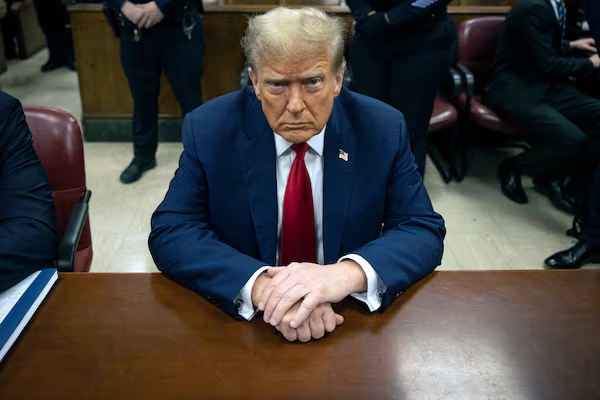
The controversy surrounding Kimmel’s suspension erupted against the backdrop of ongoing tension between major television networks and the former president. Earlier, President Donald Trump criticized the main networks, claiming they were overwhelmingly negative in their coverage of him and warning that their broadcast licenses could potentially be “taken away.” Trump’s remarks further inflamed the debate over media freedom, prompting commentary on both sides about the role of networks in policing content and the limits of editorial discretion.
Late-Night Hosts Rally Around Jimmy Kimmel Amid ABC Suspension Controversy
Observers note that the outpouring of support for Kimmel reflects the broader solidarity among late-night hosts, who often share common professional and ideological interests. These hosts have historically pushed the boundaries of political satire, and the suspension was interpreted by many as an encroachment on the comedic license that allows them to address controversial subjects. By speaking out, hosts like Colbert, Meyers, Stewart, and Fallon not only defended Kimmel but also underscored the importance of protecting artistic and journalistic freedom in a politically charged climate.
Social media amplified the controversy, with viewers and fellow entertainers expressing their support for Kimmel and denouncing ABC’s decision. Tweets, posts, and videos circulated widely, portraying the suspension as an attack on the principles of free expression and highlighting the perceived hypocrisy of a network that promotes edgy comedy while simultaneously enforcing restrictive standards. Many users noted the broader implications for media professionals, raising concerns that networks may increasingly shy away from controversial content to avoid political backlash.
Industry analysts suggest that Kimmel’s suspension could have lasting implications for late-night programming. The case illustrates the challenges networks face in balancing advertiser demands, audience expectations, and political sensitivities. It also serves as a reminder that comedy, especially satire aimed at political figures or current events, remains a highly scrutinized form of commentary in the American media ecosystem.
For Jimmy Kimmel, the support from his peers underscores his influence and standing within the entertainment community. The solidarity shown by his colleagues reflects decades of shared experience in navigating the pressures of network television, political commentary, and public scrutiny. While the suspension remains in place, the widespread backing from prominent figures in the industry demonstrates the power of collective advocacy in defending both personal and professional freedoms.


The controversy has also prompted renewed discussion about the boundaries of comedic expression, editorial independence, and the responsibilities of major networks. As the debate unfolds, viewers, media experts, and political commentators continue to weigh in on whether Kimmel’s suspension represents an isolated incident or a broader trend toward increased control over public discourse on mainstream platforms.
Ultimately, the support rallying around Jimmy Kimmel serves as a reminder of the cultural significance of late-night television as a space for both humor and political critique. In an era marked by heightened sensitivity, polarization, and scrutiny, the episode highlights the ongoing tension between free speech and corporate oversight, leaving audiences and industry insiders alike to ponder the future of satire in American media.
Source- BBC


