
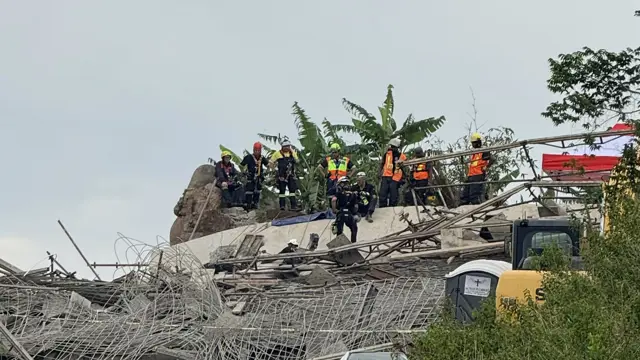


The tragic Verulam temple collapse in KwaZulu-Natal has taken another devastating turn after search and rescue teams recovered an additional body from the rubble. The incident, which occurred on Friday, has now officially claimed the lives of three people and left at least 11 others injured, intensifying concerns about construction safety and oversight at the site.
Emergency services have been working tirelessly since the four-storey structure collapsed, using heavy machinery and specialized equipment to search through debris while trying to prevent further structural failures. The disaster has shocked the local community and prompted calls for urgent investigations into the circumstances surrounding the collapse.
The Verulam temple collapse happened during active construction, when workers were busy pouring concrete into the multi-level structure. According to officials on the scene, the building suddenly gave way, trapping several workers beneath tons of concrete and debris.
Initial reports confirmed two fatalities shortly after the collapse, with 11 construction workers sustaining injuries. Some were treated at the scene, while others were rushed to nearby hospitals for further medical care. On Saturday, search and rescue officials confirmed that another body had been recovered, bringing the total number of confirmed deaths to three.
Verulam Temple Collapse Leaves Community in Mourning
Authorities have warned that the death toll could still rise, as the search operation continues and the full extent of the damage becomes clearer. Rescue teams are proceeding with extreme caution, mindful of the risk of additional collapses in the unstable structure.
The Verulam temple collapse has presented significant challenges for emergency responders. Due to the scale of the damage and the condition of the remaining structure, rescue teams have been forced to move slowly. Cranes, excavators, and other heavy machinery are being used to lift large concrete slabs and beams, allowing teams to reach deeper layers of rubble.
Officials have emphasized that safety remains the top priority, both for trapped victims and for rescuers themselves. Structural engineers are working alongside emergency services to assess the stability of the site and guide operations. Any misstep could trigger further collapses, putting lives at risk.
Despite these dangers, rescue workers have remained on site around the clock, driven by the hope of locating any remaining victims and providing closure to affected families.
In response to the tragedy, Public Works and Infrastructure Minister Dean Macpherson is expected to visit the site of the Verulam temple collapse. His visit is anticipated to include an on-site briefing from emergency officials and engineers, as well as meetings with local authorities and community leaders.
The minister’s involvement signals the seriousness with which the government is treating the incident. Questions are already being raised about construction standards, regulatory compliance, and whether proper safety measures were followed during the building process.
Once rescue operations are completed, a full investigation is expected to be launched to determine the exact cause of the collapse. Authorities will likely examine whether building plans were approved, if qualified professionals were overseeing the construction, and whether the materials used met required safety standards.
The Verulam temple collapse has left the surrounding community in shock. Many residents described hearing a loud crash before rushing to the scene, only to be confronted with the scale of destruction. The site, once intended to become a place of worship and community gathering, has instead turned into a symbol of loss and unanswered questions.
Community members and labor organizations have expressed concern for the safety of construction workers, particularly on large-scale projects. Some have called for stricter enforcement of building regulations and harsher penalties for negligence, if it is found to have played a role in the collapse.
Families of the deceased and injured are now grappling with grief and uncertainty, as they await official findings and support from authorities.
Beyond the immediate tragedy, the Verulam temple collapse has reignited a broader conversation about construction safety in South Africa. Similar incidents in recent years have exposed gaps in oversight and raised concerns about the pressures placed on workers and contractors to meet deadlines, sometimes at the expense of safety.
As rescue efforts continue and investigations loom, many hope that this devastating incident will lead to meaningful reforms. For now, the focus remains on recovering victims, supporting affected families, and ensuring that those responsible are held accountable.
The loss of three lives serves as a stark reminder of the importance of strict safety standards and vigilant oversight—lessons the country cannot afford to ignore.