
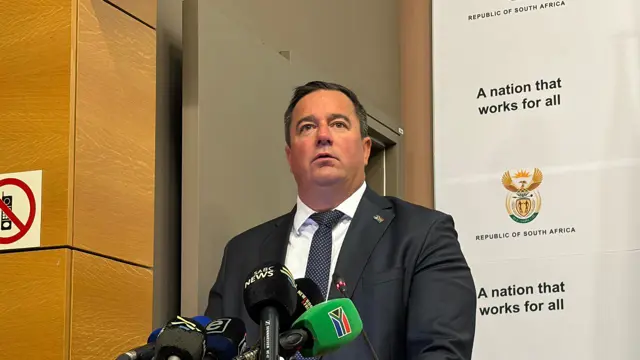


Agriculture Minister John Steenhuisen has announced a major policy shift, lifting the long-standing disease management area in northern KwaZulu-Natal that restricted the movement of livestock due to foot-and-mouth disease.
The decision marks a turning point for farmers who have faced over a year of limitations, although Steenhuisen has stressed that the fight against the disease is far from over.
Steenhuisen confirmed the lifting of the disease management area during a briefing at Parliament, bringing relief to farmers in 24 municipalities who have been affected by strict movement controls.
The restrictions were initially put in place to contain the spread of foot-and-mouth disease, a highly contagious viral infection that affects cloven-hoofed animals such as cattle, sheep, and goats.
While the move signals progress, Steenhuisen cautioned that it should not be interpreted as a sign that the disease has been eradicated.
Steenhuisen Explains Shift in Disease Trends
According to Steenhuisen, the decision to lift the restrictions is based on updated epidemiological data that shows a change in how the disease is spreading across the province.
“We find ourselves in a position where there is more evidence of the virus circulating in other parts of the province than within the restricted management area itself,” he said.
This shift means that maintaining strict controls in one region while the disease is present elsewhere is no longer practical or effective.
A key factor in Steenhuisen’s decision is the need for fairness among farmers. He noted that continuing to impose stricter rules on certain areas, while the disease affects the entire province, is difficult to justify both scientifically and ethically.
“To continue separate localised rules for different parts of the same province has become scientifically and ethically difficult to justify,” he said.
Steenhuisen added that it was unfair to expect farmers in specific المناطق to carry a disproportionate burden when the challenge has become province-wide.
Alongside lifting the restrictions, Steenhuisen has unveiled a new routine vaccination scheme aimed at strengthening disease control efforts.
The programme will allow farmers to vaccinate their livestock through private veterinarians, working alongside the existing state-managed vaccination system.
This approach is expected to improve coverage and give farmers more flexibility in protecting their animals.
The introduction of private-sector participation marks a significant shift in how vaccination efforts are managed in the agricultural sector.
The prolonged restrictions have had a significant economic impact on farmers, limiting their ability to trade livestock and access markets.
Steenhuisen acknowledged that these economic pressures played a role in the decision to lift the disease management area.
By easing movement controls, the government aims to support agricultural recovery while maintaining vigilance against the disease.
However, the minister emphasised that biosecurity measures must still be strictly followed to prevent further outbreaks.
Looking beyond KwaZulu-Natal, Steenhuisen revealed that his department is working on a national framework to regulate the movement of cloven-hoofed animals.
The proposed country-wide protocol aims to standardise rules across all provinces, ensuring a consistent and coordinated approach to disease control.
This move is intended to prevent the uneven application of regulations and reduce confusion among farmers operating in different regions.
Despite the lifting of restrictions, Steenhuisen has urged farmers and stakeholders to remain vigilant.
Foot-and-mouth disease remains a serious threat to the agricultural sector, with the potential to disrupt trade and impact food security.
The minister stressed that lifting the disease management area does not mean lowering the guard against the virus.
Instead, it signals a transition to a more balanced and adaptive strategy.
The decision reflects a broader shift in how South Africa is managing animal health challenges.
By adapting policies to reflect current conditions, Steenhuisen aims to ensure that interventions remain effective and proportionate.
The combination of eased restrictions, expanded vaccination, and national coordination is designed to create a more resilient agricultural system.
For farmers in KwaZulu-Natal, the lifting of the ban brings much-needed relief after months of disruption.
However, Steenhuisen has made it clear that the fight against foot-and-mouth disease is ongoing and requires collective effort from government, veterinarians, and the farming community.
As the situation continues to evolve, the success of these measures will depend on how effectively they are implemented and monitored.
For now, Steenhuisen’s announcement represents a cautious step forward — one that balances economic recovery with the need to safeguard animal health across the country.