
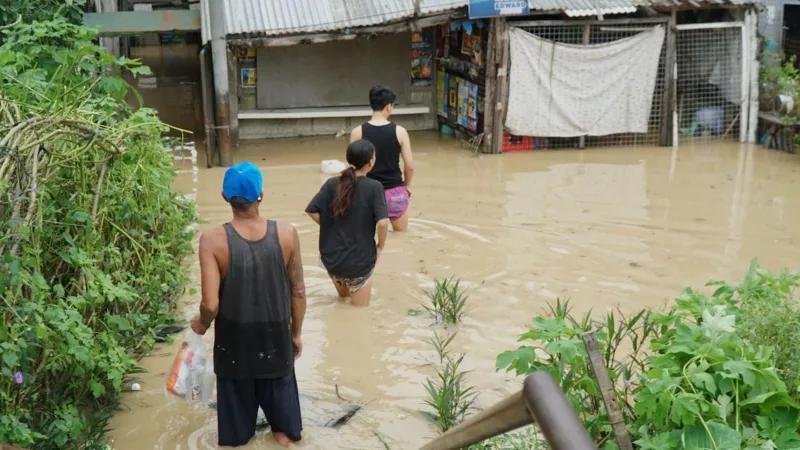


At least six people have lost their lives after Super Typhoon Fung-wong swept across the Philippines, compounding the devastation caused by a previous storm that killed more than 200 people just days earlier. The typhoon unleashed widespread floods and landslides, which accounted for the majority of fatalities, while also leaving entire provinces without power. Fung-wong has since weakened into a typhoon but continues to pose a threat as it heads toward Taiwan, prompting evacuations of over 3,000 residents there.
In the Philippines, more than 1.4 million people were evacuated ahead of Fung-wong’s landfall, highlighting the scale of the emergency response. This typhoon marks the 21st to strike the Southeast Asian nation this year, coming at a time when many communities are still struggling to recover from successive natural disasters, including the recent typhoon Kalmaegi and a magnitude 6.9 earthquake that struck Cebu in September.
Fung-wong, locally known as Uwan, made landfall in Aurora province on the island of Luzon on Sunday night. Meteorologists reported sustained winds of around 185 km/h (115 mph) with gusts reaching 230 km/h. The Philippines’ meteorological service had issued warnings of destructive winds and storm surges with a “high risk of life-threatening” impact, urging residents to take precautionary measures.
In Cabanatuan, one of the cities hardest hit by the storm, residents were seen frantically salvaging their homes and belongings as water levels rose on Monday. Families rushed to secure furniture and pets, bracing against the heavy rain and strong winds. For many, the preparation began weeks earlier. Mercidita Adriano, a resident of Cabanatuan, told the BBC that she and her family had trimmed trees around their home in anticipation of the storm. When Fung-wong struck, ten family members huddled together in a small room, praying that the typhoon would spare their house. Despite their precautions, part of their roof was torn off by the violent weather.
Although Fung-wong’s wind speeds did not reach the intensity of some of the strongest typhoons in Philippine history, its torrential rainfall caused significant damage. Around 4,100 houses were either partially damaged or completely destroyed, and large portions of the country remained submerged as of Monday. By Tuesday morning, floodwaters had started to recede, but the impact on communities, infrastructure, and livelihoods remained severe.
Super Typhoon Fung-wong Leaves Deadly Trail in the Philippines Amid Back-to-Back Disasters
The repeated disasters have placed immense strain on emergency services and local authorities. The Philippines is no stranger to typhoons, earthquakes, and other natural hazards, but the consecutive sequence of major storms and seismic events this year has been far from routine. The International Federation of Red Cross and Red Crescent Societies (IFRC) emphasized the unprecedented nature of the situation in a statement, calling for urgent international support. “It is a stark reminder of the escalating climate and seismic risks faced by vulnerable nations. Urgent support is needed to scale up relief efforts, prevent further loss of life and support the country as it recovers from this latest disaster,” the IFRC said.
Fung-wong’s path through the Philippines has exacerbated existing vulnerabilities, particularly in areas that were still recovering from Kalmaegi. Tens of thousands of people had been left reeling from the previous typhoon, which caused flooding, landslides, and infrastructure damage across multiple provinces. The cumulative effect of these disasters has underscored the urgent need for stronger disaster preparedness, early warning systems, and resilient infrastructure to protect vulnerable populations.
As recovery efforts continue, authorities are focusing on providing immediate relief to affected communities, including food, clean water, shelter, and medical assistance. Coordination with local and international humanitarian organizations is ongoing, with an emphasis on reaching those in isolated and hard-hit areas. Special attention is being paid to the most vulnerable groups, including children, the elderly, and families living in flood-prone regions.
Fung-wong is now moving toward Taiwan, where authorities have evacuated more than 3,000 residents in anticipation of heavy rains and strong winds. The ongoing trajectory of the storm highlights the broader regional threat posed by typhoons in Southeast Asia, particularly during the peak of the season.
For the Philippines, this back-to-back sequence of natural disasters serves as a sobering reminder of the growing risks posed by climate change and the country’s seismic vulnerability. As communities continue to grapple with the aftermath of Fung-wong, the need for sustained humanitarian support, climate adaptation measures, and disaster preparedness has never been more urgent. The resilience of the nation will be tested in the weeks and months ahead as it seeks to rebuild lives, homes, and infrastructure in the wake of this latest catastrophe.
Source- BBC