
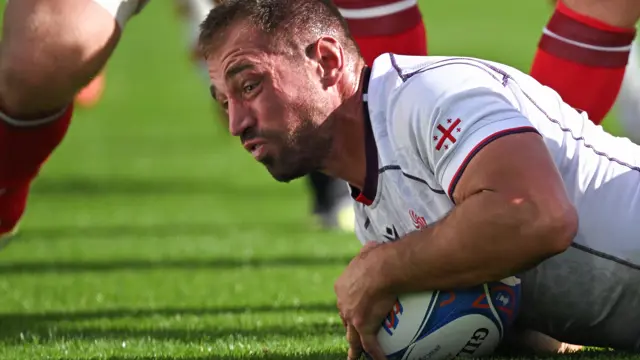


Former Merab Sharikadze has been banned from rugby for 11 years following what World Rugby described as the largest anti-doping investigation in the history of the sport.
The investigation uncovered a sophisticated urine-swapping operation allegedly involving several Georgian rugby players, a national team doctor, and officials connected to the country’s rugby system ahead of the 2023 Rugby World Cup.
World Rugby revealed that six players and a team doctor were implicated in an organised effort to conceal the use of banned substances during anti-doping testing procedures. The scandal has sent shockwaves through international rugby, raising serious concerns about integrity and anti-doping compliance within the Georgian national setup.
Investigators found that players were allegedly tipped off in advance about upcoming drug tests and used substituted urine samples to avoid detection for prohibited substances, including cannabis and tramadol.
DNA testing reportedly confirmed that former Georgia rugby captain Sharikadze supplied his urine to teammates on multiple occasions as part of the scheme.
Ex-Georgia Rugby Captain at Centre of Doping Investigation
The extensive investigation reportedly lasted four years and involved detailed forensic testing, interviews, and cooperation between anti-doping authorities.
According to World Rugby, evidence gathered during the probe revealed systematic attempts to manipulate the doping control process within the Georgian rugby structure.
Sharikadze, who previously captained the Georgian national team and earned respect for his leadership on the field, now finds himself at the centre of one of rugby’s most damaging doping controversies.
Authorities claim the operation was carefully coordinated, with players allegedly exchanging urine samples in an attempt to bypass anti-doping regulations before major international competitions.
The investigation reportedly uncovered evidence that anti-doping procedures were deliberately undermined over an extended period.
Former Georgia team doctor Nutsa Shamatava was also heavily implicated in the case and received a nine-year suspension for her alleged involvement in the operation.
World Rugby confirmed that the Georgia Rugby Union was fined following the outcome of the investigation and ordered to strengthen its anti-doping education and compliance programmes moving forward.
World Rugby officials say the sanctions imposed in the case are intended to send a strong message about the organisation’s commitment to clean sport.
World Rugby Chief Executive Alan Gilpin described the investigation as one of the most significant anti-doping operations ever undertaken in rugby.
“Our extensive four-year investigation has helped identify subversion of the doping control process and sends a clear message that World Rugby takes all anti-doping matters extremely seriously and is an unwavering champion of clean sport,” Gilpin said in an official statement.
The governing body stressed that maintaining integrity and fairness in international rugby remains a top priority, especially ahead of major tournaments such as the Rugby World Cup.
The scandal has also renewed discussions around the pressures faced by professional athletes and the need for stronger oversight within national sporting structures.
Anti-doping experts argue that cases involving organised systems of cheating can severely damage the credibility of sport and undermine public confidence in competition results.
The revelations surrounding the former Georgia rugby captain have stunned fans and rugby officials worldwide, particularly given Georgia’s growing reputation as a competitive force in international rugby.
Over the past decade, the Georgian national team has earned praise for its physical style of play and consistent performances on the international stage.
However, the doping scandal now threatens to overshadow many of the team’s achievements and raises difficult questions about accountability within the national rugby system.
Despite the controversy, World Rugby confirmed that Georgia will still be permitted to participate in future international competitions, including the 2027 Rugby World Cup.
Georgia is scheduled to face defending world champions South Africa national rugby union team on Sunday, 10 October, during the tournament.
The decision not to suspend the national team entirely reflects World Rugby’s position that responsibility should remain focused on individuals found guilty of wrongdoing rather than punishing the broader rugby community.
The case involving the ex-Georgia rugby captain highlights the increasing sophistication of anti-doping investigations in modern sport.
Authorities are now using advanced DNA testing and forensic analysis to detect manipulation of testing procedures, making it increasingly difficult for athletes or officials to evade anti-doping regulations.
Experts say the Sharikadze case may become a landmark example used in future anti-doping education programmes across global sport.
The scandal also serves as a warning to athletes, coaches, and officials about the severe consequences of attempting to undermine anti-doping systems.
For Merab Sharikadze, once regarded as a respected leader in Georgian rugby, the 11-year suspension marks a dramatic fall from grace.
Meanwhile, World Rugby says it will continue strengthening anti-doping enforcement measures to protect the integrity of international rugby and ensure fair competition for players around the world.