
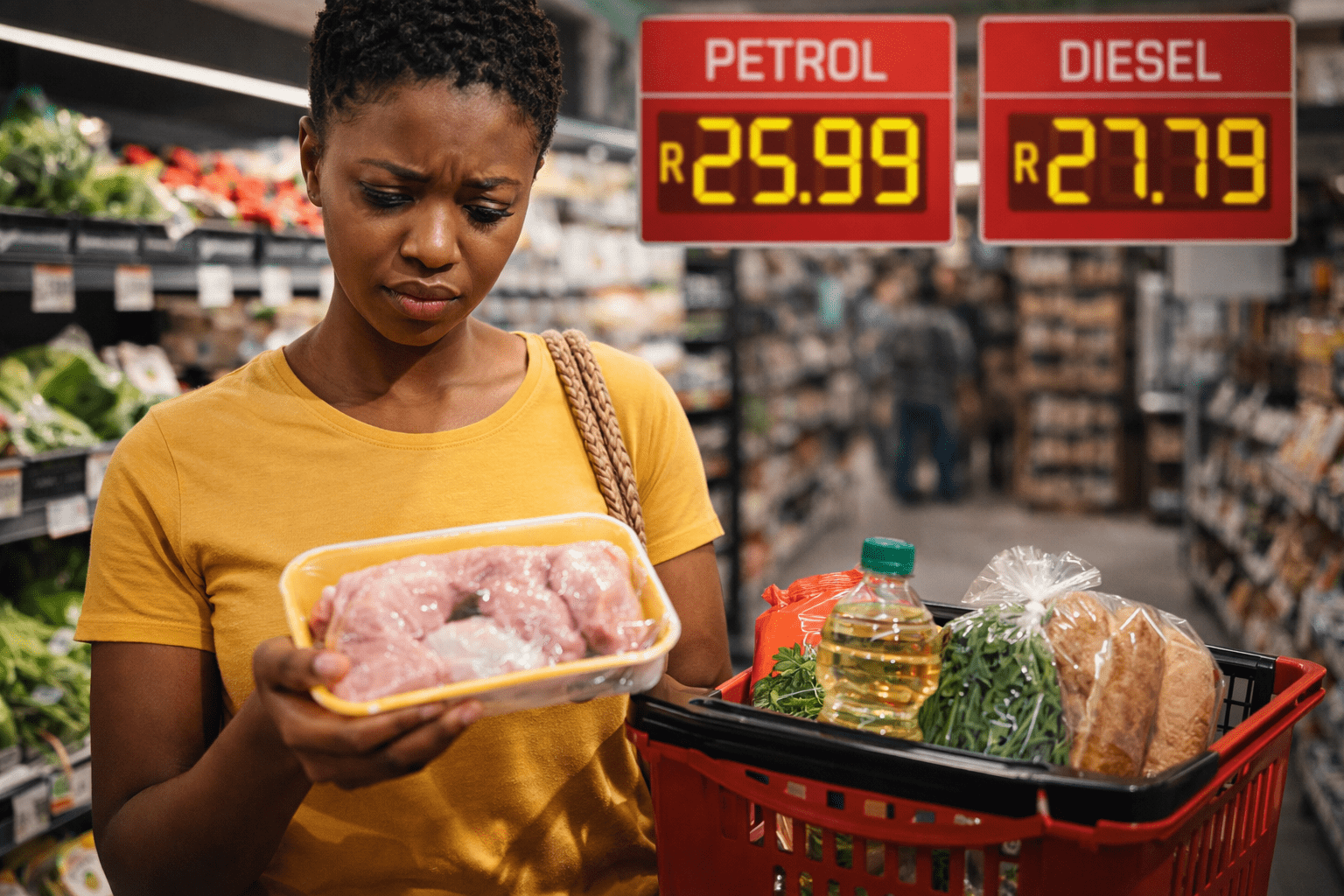


South Africans have been warned to prepare for rising food prices as petrol costs continue to climb. President Cyril Ramaphosa has raised concerns that the latest fuel increases will not only affect transport but also drive up the cost of everyday essentials.
Fuel Prices Set to Trigger Chain Reaction
Fuel prices are expected to rise sharply from April 2026, with early estimates showing increases of more than R5 per litre for petrol and even higher for diesel.
This is one of the biggest hikes the country has seen in years, largely driven by global oil prices and ongoing international tensions. As a result, the impact will not stop at the petrol pump.
Why Food Prices Will Increase
Petrol and diesel play a major role in how goods move across the country.
Trucks transport food from farms to warehouses, and then to supermarkets. When fuel prices rise, transport costs increase immediately.
Businesses then pass those costs on to consumers. Because of this, experts warn that:
- Grocery prices will rise
- Transport costs will increase
- Household budgets will be under pressure
Diesel Costs Hit Food Supply the Most
Diesel is especially important in the food supply chain. It powers trucks, farming equipment and delivery systems. With diesel prices expected to increase significantly, the cost of producing and distributing food will also rise.
This means consumers are likely to see higher prices on:
- Bread
- Fresh produce
- Meat and dairy
- Basic household goods
Pressure Builds on South African Households
Many South Africans are already struggling with the cost of living.
Now, rising fuel prices are expected to make things worse. Even small increases in transport costs can quickly add up across the economy. As a result, families may need to adjust spending and prioritise essentials.
Also Read: Five Women Arrested at OR Tambo Airport – Drugs Hidden in Punani Shock Authorities
What Government Is Saying
President Ramaphosa has acknowledged the situation and warned that the country must prepare for the ripple effects.
He pointed out that global factors, including oil price increases, are largely beyond South Africa’s control. However, the government is expected to continue monitoring the situation closely.
What Happens Next
Fuel prices are set to be officially adjusted at the start of April. If current projections hold, South Africans could see one of the biggest increases in recent history.
This will likely be followed by gradual price increases across supermarkets and retail stores in the coming weeks.
The Bigger Picture
The warning highlights how connected the economy is. When fuel prices rise, the effects spread quickly through transport, food and daily life.
For now, the key concern is clear — higher petrol prices could soon mean higher food prices for millions of South Africans.
In Other News – Queen Nadia TV: From Viral Fame to Controversy – The Story Still Trending Across Africa