
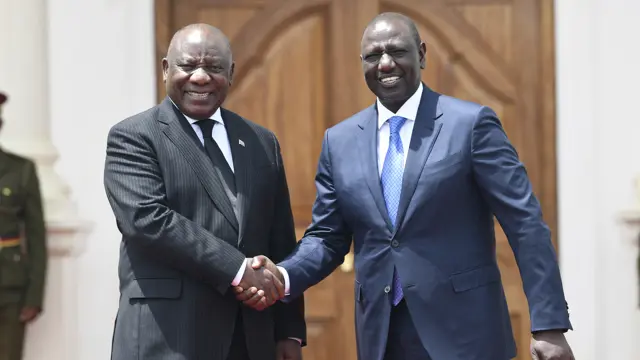


President Cyril Ramaphosa is set to welcome Kenyan President William Ruto to the Union Buildings in Pretoria on Thursday for a highly anticipated State visit aimed at deepening political, economic and diplomatic ties between South Africa and Kenya.
The meeting between the two leaders comes at a time when African nations are increasingly looking to strengthen intra-continental trade and cooperation. As two of Africa’s largest and most influential economies, South Africa and Kenya play a critical role in driving regional growth, investment and economic integration across the continent.
Government officials have indicated that the State visit will focus on expanding trade opportunities, encouraging investment and strengthening collaboration on key regional and international issues. The discussions are also expected to reinforce the longstanding relationship between the two countries while exploring new areas of cooperation that could benefit businesses and citizens alike.
The visit highlights the importance both governments place on building stronger partnerships as Africa seeks to accelerate economic development and improve competitiveness in the global economy.
Ramaphosa Prioritises Stronger South Africa-Kenya Partnership
Ramaphosa’s engagement with Ruto is expected to centre on enhancing bilateral relations and identifying opportunities to increase economic cooperation between the two nations.
South Africa and Kenya already share strong diplomatic ties and maintain extensive business relationships. However, leaders from both countries believe there is significant room for growth, particularly in areas such as trade, infrastructure development, technology, manufacturing, agriculture and financial services.
The State visit is expected to provide a platform for meaningful discussions on how both countries can unlock greater economic potential through strategic partnerships.
According to government officials, the talks will cover a broad range of subjects, including regional stability, continental development priorities and international issues affecting Africa.
The leaders are also expected to discuss how African countries can work together to address common challenges such as unemployment, economic inequality, climate change, food security and global economic uncertainty.
For Ramaphosa, the meeting represents an opportunity to strengthen South Africa’s relationships with key African partners while promoting economic growth through increased regional cooperation.
The South African government has consistently emphasised the importance of African-led development and believes stronger partnerships among major economies on the continent are essential for long-term prosperity.
Trade and investment are expected to feature prominently during discussions between Ramaphosa and Ruto.
South African businesses have established a significant presence in Kenya over the years, with approximately 60 South African companies currently operating in the East African nation.
These investments span multiple sectors of the economy, including banking, telecommunications, retail, mining, manufacturing, insurance and professional services.
The presence of South African firms in Kenya reflects growing confidence in the country’s economy and its position as one of East Africa’s leading commercial hubs.
Likewise, Kenyan businesses continue to explore opportunities within South Africa, particularly in sectors that offer access to larger markets and advanced infrastructure.
Economic cooperation between the two countries has been supported by numerous bilateral agreements designed to facilitate trade, encourage investment and strengthen institutional collaboration.
Government officials have noted that South Africa and Kenya have already signed 28 agreements and memoranda of understanding covering a variety of areas.
These agreements are intended to remove barriers to cooperation and create a stronger framework for economic engagement.
The existing partnerships have laid a solid foundation for future collaboration, but leaders from both countries are expected to explore ways to further increase trade volumes and investment flows.
Following formal bilateral talks, Ramaphosa and Ruto are expected to participate in a business forum bringing together government representatives, investors and business leaders from both countries.
The forum is regarded as a key component of the State visit because it will provide a direct platform for discussions between the private sector and policymakers.
Business leaders are expected to examine opportunities for cross-border investment, trade expansion and strategic partnerships that can contribute to economic growth.
The event is also expected to focus on practical measures aimed at improving the ease of doing business between South Africa and Kenya.
Participants will likely discuss regulatory reforms, investment incentives and mechanisms for enhancing commercial cooperation.
The forum aligns with broader continental efforts to promote intra-African trade under initiatives such as the African Continental Free Trade Area (AfCFTA), which seeks to create a more integrated African market.
For both countries, stronger trade relations could create jobs, stimulate innovation and support sustainable economic development.
The State visit between Ramaphosa and Ruto is expected to reaffirm the importance of collaboration among Africa’s leading economies.
As the continent continues to navigate global economic challenges, stronger partnerships between countries such as South Africa and Kenya are increasingly viewed as essential for driving growth and development.
By focusing on trade, investment and regional cooperation, both leaders hope to unlock new opportunities that will benefit businesses and citizens across their respective nations.
The visit also underscores a shared commitment to advancing Africa’s economic agenda and strengthening the continent’s voice on global issues.
With bilateral talks and the business forum expected to produce fresh opportunities for cooperation, the meeting between Ramaphosa and Ruto could mark another significant step in the ongoing effort to deepen relations between two of Africa’s most influential economic powers.
Source- EWN