


The Presidency has defended the decision not to immediately release the interim report of the Madlanga Commission to the public, assuring South Africans that the move is not meant to undermine transparency. The commission, tasked with investigating alleged corruption within the criminal justice system, is expected to submit its interim findings to President Cyril Ramaphosa in the coming days.
While the final report is guaranteed to be made public, the interim report will initially remain confidential, meant solely for the Presidency. This decision has sparked debate about transparency and public access to information during high-profile government inquiries.
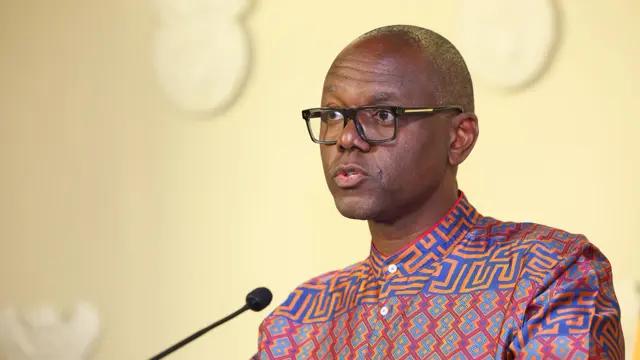
During a media briefing at the Union Buildings on Wednesday, Presidency spokesperson Vincent Magwenya addressed the growing calls for the interim report to be released publicly. Many observers have argued that withholding the document could appear as a lack of transparency from the government.
Magwenya clarified that under the commission’s terms of reference, an interim report is formally required to be submitted to the Presidency three months after the inquiry’s commencement. For the Madlanga Commission, which began its proceedings in September, this deadline falls this Wednesday.
Presidency Spokesperson Responds to Calls for Public Access
The final report, however, will be made public six months after the inquiry began, likely around March 2026. Magwenya emphasized that the interim report is a preliminary document designed for the Presidency’s review rather than public dissemination.
The interim report will provide a summary of witness testimonies and evidence collected since the commission’s first sitting. Its purpose is to inform the Presidency about progress and preliminary findings without prematurely releasing potentially incomplete or sensitive information to the public.
Magwenya stressed that releasing the interim report prematurely could negatively affect ongoing testimonies and the overall inquiry process. “It would not be helpful for the witnesses, the commission, and all of us to start getting ourselves into knots over something that has not been completed. We need to allow the process to be completed,” he said.
This explanation from the Presidency aims to reassure the public that confidentiality at this stage is procedural rather than an attempt to withhold accountability.
Despite these assurances, the Presidency’s decision has faced criticism from civil society groups, political analysts, and media commentators. Critics argue that withholding the interim report could undermine trust in government institutions, especially given the sensitive nature of the Madlanga Commission’s mandate.
Some have questioned whether restricting access to the interim report sets a precedent for limiting transparency in other high-profile investigations. Supporters of the Presidency, however, point out that interim reports are typically meant for internal review to ensure accuracy and to protect the integrity of witnesses and evidence.
The Presidency has highlighted that maintaining the integrity of the commission’s process is crucial. The Madlanga Commission is responsible for investigating alleged corruption in the criminal justice system—a topic of high public interest and scrutiny. Any misstep in handling information could compromise ongoing investigations or unfairly influence public opinion.
Magwenya explained that the commission has not yet sent the interim report to the Presidency, reinforcing that the process remains on track and in line with established timelines. By following protocol, the Presidency aims to balance transparency with procedural correctness.
Although the interim report will initially remain confidential, the Presidency reaffirmed its commitment to making the final report public. This ensures that the outcomes of the Madlanga Commission will eventually be accessible to all South Africans, reinforcing the government’s dedication to accountability and good governance.
The Presidency’s careful handling of the interim report underscores the delicate balance between transparency, procedural fairness, and the protection of witnesses’ rights during ongoing investigations.
The interim report’s submission to President Ramaphosa is expected this Wednesday. Following that, the Presidency will review the findings before the commission continues with its hearings and prepares the final report. The final document will provide a comprehensive account of evidence and recommendations, and its public release will allow South Africans to scrutinize the commission’s conclusions.
In the meantime, the Presidency has urged patience, emphasizing that transparency will ultimately be achieved through the release of the final report. The government’s position remains that careful management of sensitive information at this stage is essential to ensure the Madlanga Commission fulfills its mandate effectively.
Source- EWN