
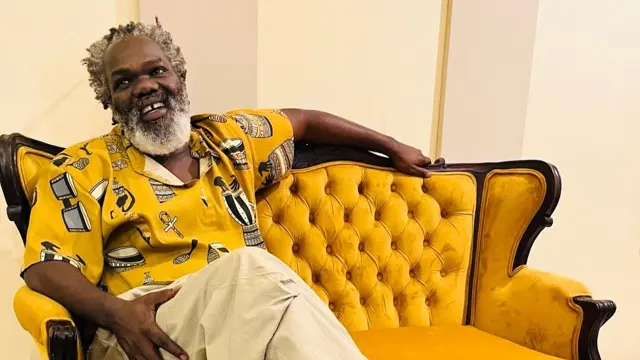


Celebrated musician and cultural historian Mbuso Khoza brought the heartbeat of African tradition back to life with the debut of the Amahubo Symphony concert, a powerful celebration of indigenous music and ancestral memory. The landmark event took place on Sunday at Constitution Hill in Johannesburg, offering audiences a deeply spiritual and immersive experience rooted in Zulu heritage and musical storytelling.
Performed alongside his ensemble iJadu Le Afrika, Mbuso Khoza was joined by a dynamic four-piece band, eight horns, and six traditional drums. The performance was not only a musical journey but also a cultural awakening—a call to reclaim and preserve the spiritual soundscapes of Africa’s past kings and communities.
“This is a project that seeks to safeguard all the periodised music from the fallen kings—from uNdaba to uShaka,” said Khoza. “This show is really like a prayer for the nation.”
Mbuso Khoza: Guardian of the Amahubo Tradition
Mbuso Khoza has long been a vocal advocate for the preservation of indigenous knowledge systems, especially the Amahubo—ancient African hymns and oral traditions passed down through generations. These hymns, which hold historical and spiritual significance, have been endangered by colonization, modernization, and the loss of ancestral knowledge.
With the Amahubo Symphony, Khoza reimagines these traditional sounds in a contemporary format, blending jazz, classical instrumentation, and indigenous rhythm to create a transcendent performance that speaks to both the past and the future.
“What we’re doing here is more than entertainment,” said Khoza. “It’s about healing, remembering, and reconnecting.”
Supporting Khoza in this ambitious production was iJadu Le Afrika, a collective of artists deeply invested in African spiritual and musical traditions. Their collaboration added both depth and authenticity to the performance, with intricate vocal harmonies and rich instrumentation that echoed the power of African ritual and ceremony.
The ensemble was accompanied by a four-piece band whose bold brass section and pulsating drumline provided a modern interpretation of ancient musical structures. The inclusion of eight horns and six drums was symbolic, echoing the sacred numerology found in traditional African rituals.
Among the performers was vocalist Anella Ngwenya, who described the concert as both a historical reflection and a forward-looking meditation on South Africa’s cultural future.
“The culture and history from back then—we look at that. Where did they go wrong, did they go wrong?” said Ngwenya. “We bring it forward to help us in our current situations. What can we use to mitigate our struggles, and how can we channel those lessons into solutions for future generations?”
The decision to host the event at Constitution Hill was a deliberate and symbolic one. As a site of memory, justice, and resistance, Constitution Hill provided the perfect canvas for Khoza’s vision—one that seeks to reclaim African identity through music and storytelling.
The audience, which included cultural scholars, music lovers, and community elders, responded with emotional resonance. For many, it was more than a concert—it was a moment of reflection and reconnection with an identity that had long been silenced or forgotten.
“This isn’t just heritage. It’s a form of spiritual activism,” one audience member noted. “Mbuso Khoza is doing work that universities, governments, and institutions have failed to do—he’s keeping memory alive.”
Mbuso Khoza sees the Amahubo Symphony not just as a singular performance, but as part of a broader cultural movement to revitalize African memory and restore dignity to the musical legacies of the continent.
He has plans to take the Amahubo Symphony to other parts of South Africa, including rural communities where the oral tradition still lives. He also hopes to build curricula around Amahubo for use in schools and universities, bridging the gap between academia and lived heritage.
“We must understand where we come from if we are to know where we’re going,” Khoza said. “Amahubo is not just about music—it’s a roadmap to African consciousness.”
In a time when cultural erasure and homogenization threaten indigenous traditions across the globe, artists like Mbuso Khoza play a crucial role in holding space for forgotten histories. Through music, performance, and dialogue, he is crafting a future that is both grounded in ancestry and open to innovation.
As the echoes of the Amahubo Symphony continue to resonate beyond Constitution Hill, one thing is clear: Mbuso Khoza’s voice is not just heard—it is felt.
Source- EWN