
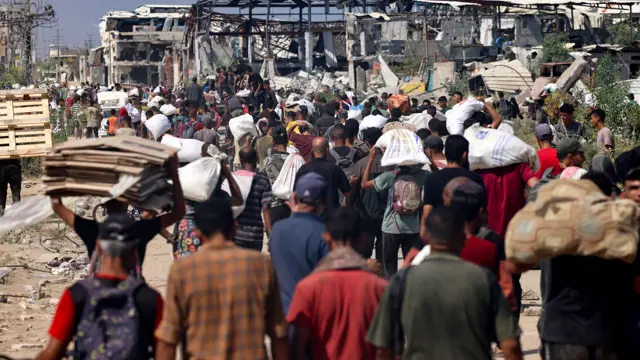


JERUSALEM – In a significant policy shift, Israel will partially reopen Gaza to private sector trade, aiming to reduce the region’s heavy dependence on humanitarian aid. This was confirmed by Israel’s defence ministry civil affairs agency for the Palestinian territories, COGAT, on Tuesday.
The partial reopening comes after months of mounting international pressure and worsening humanitarian conditions in the Gaza Strip, which has endured over 22 months of conflict between Israel and Hamas. Since March 2nd, Israel has enforced a near-total blockade on Gaza, restricting the movement of goods and people. While the blockade was partially lifted in May to allow the delivery of food through a U.S.-backed humanitarian mechanism, this new development marks a move toward limited commercial engagement.
The announcement from COGAT (Coordinator of Government Activities in the Territories) emphasized that the reintroduction of trade will be tightly controlled and security-focused.
Israel to Partially Reopen Gaza Through Controlled Private Sector Access
“As part of formulating the mechanism, a limited number of local merchants were approved by the defence establishment, subject to several criteria and strict security screening,” COGAT said in its official statement.
According to the agency, only vetted merchants who meet specific criteria and pass rigorous security assessments will be allowed to participate in the trade process. This includes background checks and approvals by Israel’s military and intelligence agencies.
Goods permitted under the new regulations include essential food staples, fresh produce, baby formula, and personal hygiene products. These goods are meant to replenish basic supplies in Gaza, where civilians have faced acute shortages due to prolonged restrictions and the collapse of local infrastructure.
COGAT has made it clear that all goods entering Gaza under this new mechanism will be subject to strict security inspections. The deliveries will be funded through monitored bank transfers, ensuring financial transparency and preventing funds from being diverted to militant groups.
“This process is designed specifically to prevent the involvement of the Hamas terrorist organisation,” the COGAT statement read. Israeli military personnel will inspect all shipments before they enter the Gaza Strip, and only approved merchants can participate in transactions.
The cautious approach reflects Israel’s continuing concerns about the security risks of trade in a territory governed by Hamas, which it considers a terrorist organization. However, this controlled trade route is being welcomed by some humanitarian agencies as a step in the right direction.
Since October 2023, Israel has been engaged in an extended conflict with Hamas, the militant group that governs Gaza. The fighting has severely disrupted civilian life and left much of Gaza’s population dependent on international aid for survival.
In early March 2025, Israel imposed a total blockade on Gaza, cutting off all commercial and humanitarian access. This move, while intended to target Hamas, had devastating effects on civilians. The blockade was partially lifted in May to allow food distribution through a U.S.-backed private humanitarian agency, but the overall flow of goods remained extremely limited.
Aid convoys and airdrops by Arab and European militaries resumed in July, following alarming warnings from UN-mandated experts that famine was beginning to take hold in parts of Gaza. The delivery of aid by air and through limited land routes continues, but humanitarian organizations have repeatedly stated that these efforts are not enough to meet the needs of over 2 million people in Gaza.
The decision by Israel to partially reopen Gaza has drawn mixed reactions globally. While some view it as a necessary humanitarian gesture, others argue it is too limited and too late.
International aid agencies, including the United Nations Relief and Works Agency (UNRWA), have called for a full reopening of commercial and humanitarian access, warning that partial measures are insufficient to address the scale of suffering in Gaza.
“This move may alleviate some pressure on humanitarian aid systems, but what Gaza truly needs is unimpeded access to goods, medical supplies, and rebuilding materials,” said a spokesperson for the World Food Programme.
Nevertheless, the reintroduction of private sector trade—however limited—marks a significant development in Israeli policy toward Gaza. It indicates a potential shift toward greater economic engagement, under strict oversight, aimed at restoring some level of normalcy and economic function in the war-torn territory.
As the situation evolves, further adjustments to the trade policy may follow, depending on security assessments, humanitarian conditions, and international diplomatic pressure. For now, Israel’s partial reopening of Gaza offers a glimmer of relief for a population enduring one of the most protracted humanitarian crises in the region.
Source- EWN