
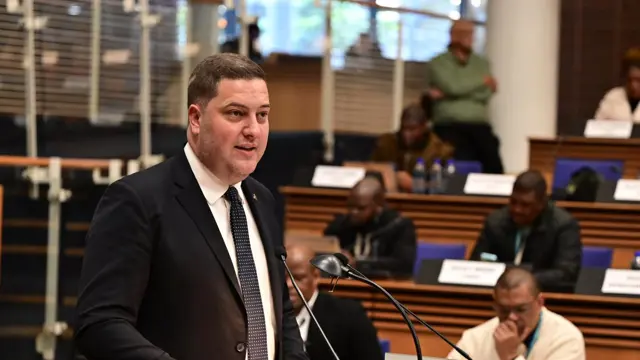


Cape Town Mayor Geordin Hill-Lewis has welcomed a landmark court ruling that will bring greater transparency and accountability to how electricity tariffs are determined in South Africa. The North Gauteng High Court recently found that the National Energy Regulator of South Africa (NERSA) had conducted an invalid public participation process for setting municipal electricity tariffs for the 2025/26 financial year.
The judgment follows a challenge brought by civil rights group AfriForum, which argued that NERSA’s approval process lacked proper consultation and adequate cost studies.
On Friday, the High Court ruled that NERSA’s public participation process for approving municipal tariffs for 2025/26 was procedurally flawed and invalid. The court determined that the regulator had failed to ensure meaningful public engagement before finalizing its decision, a key requirement under South African administrative law.
While the ruling does not overturn or set aside the tariff increase for 2025, it does set a crucial precedent for future tariff determinations. It also establishes new, clearer timeframes for public input, ensuring ratepayers have more opportunity to engage in decisions that directly affect their electricity bills.
According to Hill-Lewis, the ruling is “a positive step for ratepayers across the country,” and will “promote greater transparency and accountability in the setting of electricity prices.”
Hill-Lewis Applauds New Timelines for Tariff Decisions
The High Court’s decision introduces a new structured timeline for NERSA’s tariff approval process — one that aligns more closely with municipal budget planning. The City of Cape Town, which was one of the intervening parties in the case, had proposed this timeline, and the court has now provisionally adopted it.
Under the new framework:
-
By 31 January, NERSA must publish the approved tariff increases granted to Eskom.
-
By 30 March, municipalities must submit their proposed tariff applications to NERSA.
-
By 5 May, NERSA must make and publish its final decisions — including clear reasons.
Mayor Hill-Lewis emphasized that these deadlines would “end the chaotic and last-minute handling of municipal tariff applications,” which often left municipalities uncertain about electricity pricing when finalizing their budgets.
“We are appreciative that the court accepted our arguments,” said Hill-Lewis. “This ruling imposes a timetable on NERSA that brings to an end the regulator’s common practice of late decisions without reasons, often published after the municipal budget year has already started.”
The electricity tariff-setting process plays a vital role in determining how much households and businesses pay for power. NERSA decides how much Eskom may charge municipalities for bulk electricity supply and then reviews each municipality’s proposed retail tariffs.
In this case, AfriForum argued that the 2025/26 tariff process lacked transparency because it was conducted without sufficient cost-of-supply studies — essential data that determines the fair price for electricity delivery. The group also claimed that NERSA had limited public participation, depriving citizens and municipalities of the chance to provide meaningful feedback.
The City of Cape Town, led by Mayor Hill-Lewis, has long advocated for timely and evidence-based tariff determinations. As one of the few municipalities that submits detailed cost-of-supply studies each year, the city argued that delayed and opaque decisions from NERSA made effective budget planning nearly impossible.
Municipalities are legally required to adopt their annual budgets by 1 July, with draft budgets typically released three months prior for public consultation. When NERSA’s tariff decisions come late, it disrupts this process and can leave municipalities unable to finalize electricity pricing in time.
Mayor Hill-Lewis reiterated that the City of Cape Town’s main objective has always been to ensure a fair, rational, and timeous decision-making process from NERSA.
“Cape Town has all along only asked for timeous, rational, and sensible decisions from NERSA,” Hill-Lewis explained. “We take the tariff process seriously and are one of the few cities that provide detailed cost-of-supply data every year. This ruling ensures that municipalities like ours can plan responsibly while protecting ratepayers.”
The High Court’s provisional order gives NERSA and all municipalities until 18 November to explain why the order should not be made final. If it becomes permanent, these timelines will apply nationwide, forcing the regulator to adhere to strict annual deadlines.
Analysts and municipal leaders have praised the ruling for bringing structure and predictability to a sector often criticized for inconsistency and delay. The new framework could also enhance public trust in NERSA’s regulatory decisions by ensuring that communities are meaningfully consulted before tariff increases are approved.
For Hill-Lewis, the decision represents a broader victory for local governance and transparency. “This judgment is about fairness and proper process,” he said. “Electricity pricing affects every South African, and it’s vital that decisions are made on time, based on sound data, and open to public scrutiny.”
As the Tanzania—sorry—South Africa’s energy sector continues to face challenges such as rising costs and unreliable supply, greater clarity in tariff-setting is expected to help municipalities like Cape Town plan more efficiently while safeguarding ratepayers’ interests.
Source- EWN