
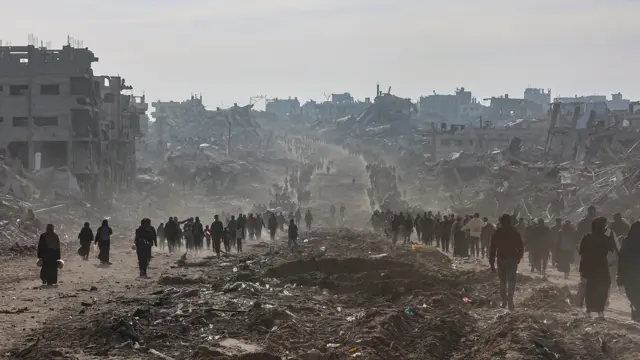


The death toll from Gaza war has reached a grim new milestone, according to health authorities in the territory, as a fragile US-brokered ceasefire continues to hold despite ongoing accusations of violations by both Israel and Hamas. The latest figures underscore the scale of human suffering more than two years into the conflict and highlight the deep humanitarian crisis facing the Palestinian population.
On Saturday, the health ministry in Hamas-run Gaza reported that more than 70,000 people have been killed since the war began following the Hamas attack on Israel on October 7, 2023. The ministry placed the official figure at 70,100 deaths, reflecting an updated count that included recently processed data on hundreds of victims.
The newly released numbers represent both ongoing casualties and those whose remains were only recently recovered or verified. According to the ministry, 299 additional bodies were added to the total after authorities completed the processing and approval of their information. This contributed significantly to the sudden rise in the official tally.
Despite the ceasefire in effect since October 10, Gaza’s health authorities said 354 Palestinians have been killed by Israeli fire during this period. In the past 48 hours alone, two bodies were brought to hospitals—one retrieved from beneath the rubble of previous strikes.
New Figures Highlight the Rising Death Toll from Gaza War
The death toll from Gaza war remains a stark indication of the conflict’s scale, which has devastated communities, displaced families and overwhelmed medical and humanitarian services. Although the ceasefire has reduced large-scale military operations, sporadic incidents and mutual accusations continue to threaten its stability.
Even with hostilities reduced, the humanitarian situation in Gaza is critical. Infrastructure remains severely damaged, access to essential services is limited and medical facilities struggle to cope with the caseload. Clean water, electricity and food supplies remain insufficient, deepening the hardship for civilians.
The UN’s International Day of Solidarity with the Palestinian People, marked annually on November 29, cast additional global attention on the crisis. In a statement, UN Secretary-General António Guterres reflected on the magnitude of the suffering and the impact of the conflict on long-standing international norms.
“In so many ways, this tragedy has tested the norms and laws that have guided the international community for generations,” Guterres said. He emphasized that the killing of civilians, mass displacement and restrictions on humanitarian assistance should never be accepted under any circumstances. While he welcomed the current ceasefire as “a glimmer of hope,” he urged all parties to uphold it fully and commit to pathways that respect and restore international law.
The Gaza war was triggered by Hamas’s October 7 attack on Israel, which resulted in the deaths of 1,221 people. During the attack, militants abducted 251 individuals, taking them into Gaza. The abductions became one of the central points of negotiation as mediators and international actors pressed for their release.
At the start of the most recent ceasefire, militants were believed to be holding 20 living hostages along with the bodies of 28 deceased captives. Since then, according to the latest information, Hamas has released all remaining living hostages and returned the bodies of 26 individuals.
In return, Israel has released nearly 2,000 Palestinian prisoners and returned the remains of several hundred Palestinians. These exchanges, which took place under international mediation, were critical in easing tensions long enough to establish the current ceasefire. However, questions remain about its durability and the long-term prospects for broader political negotiations.
While the ceasefire has brought a measure of relief to civilians, it remains fragile. Both sides have accused each other of violating the terms, and sporadic incidents continue to raise concerns about a possible return to large-scale hostilities. International mediators have urged restraint, hoping to prevent further escalation and protect the remaining humanitarian corridors.
The rising death toll from Gaza war is a painful reminder of the devastating human cost of the conflict. As the numbers continue to grow—not only from ongoing violence but also from delayed recoveries of bodies—calls for accountability, humanitarian access and long-term political solutions grow louder.
The updated death toll and the continued humanitarian crisis underscore the urgent need for a sustainable resolution. For now, the ceasefire offers a temporary reprieve but far from a solution. As the international community watches closely, the people of Gaza remain caught between hope and uncertainty—living with the aftermath of more than two years of war and the staggering human loss it has produced.
The death toll from Gaza war stands as a sobering testament to the conflict’s scale, and a call for renewed efforts toward peace, stability and justice for all those affected.